

Recently, I heard a fable from our local culture here. The story goes as follows:
A dog and an elephant both got pregnant at the same time. Very soon, the dog had a full litter of pups. It soon got pregnant again, and again delivered a full litter of pups. A third time, and a fourth time this happened, during which time the elephant was still carrying its first pregnancy (elephants having an incredibly long gestation period). After a fourth litter, the dog came to the elephant and mocked her, saying, “How is it that I have birthed all these pups, and you have not yet given birth even once?!”
The Elephant replied, “The difference is, you have only produced many dogs, but I am producing an elephant.”
In our culture dogs are looked upon as a despised thing, and to call someone a dog, as in many countries, is to equate them to something worthless. On the other hand, it is said that elephants are so valuable that they are worth the same dead as they are alive. The speed of delivery means nothing, if what is produced is worthless.
And this is the problem isn’t it. As humans, we are so prone to impatience. We long to rush along the path, producing as much as possible, in the shortest amount of time. It takes a work of grace in our hearts to help us to slow down and slog out the path ahead of us, taking time, even when others seem to be doing things faster, that we may see something worthwhile in the end. To follow the saints of old, to walk in their footsteps, as they waited upon God’s promises, is not an easy thing, but it is the most necessary thing.
In Leviticus 19 there is a whole list of commands, most of them ending with the refrain, “I am the LORD your God.” As God was bringing his people into the promised land, he was training them, preparing them to be a priestly nation, those who would mediate blessing to God to each other, to the land, and to the nations around them. Even in this list we have commands telling them how to behave in regard to parents, siblings, children, neighbours, the poor, the disabled, foreigners, animals, and even the land itself. In every sphere of life, they were to set apart the Lord as holy in their lives, and thus act as conduits of blessing to all.
What’s interesting though, is the command in verses 23-25:
“When you come into the land and plant any kind of tree for food, then you shall regard its fruit as forbidden. Three years it shall be forbidden to you; it must not be eaten.
And in the fourth year all its fruit shall be holy, an offering of praise to the Lord.
But in the fifth year you may eat of its fruit, to increase its yield for you: I am the Lord your God.”
– Lev 19:23-25
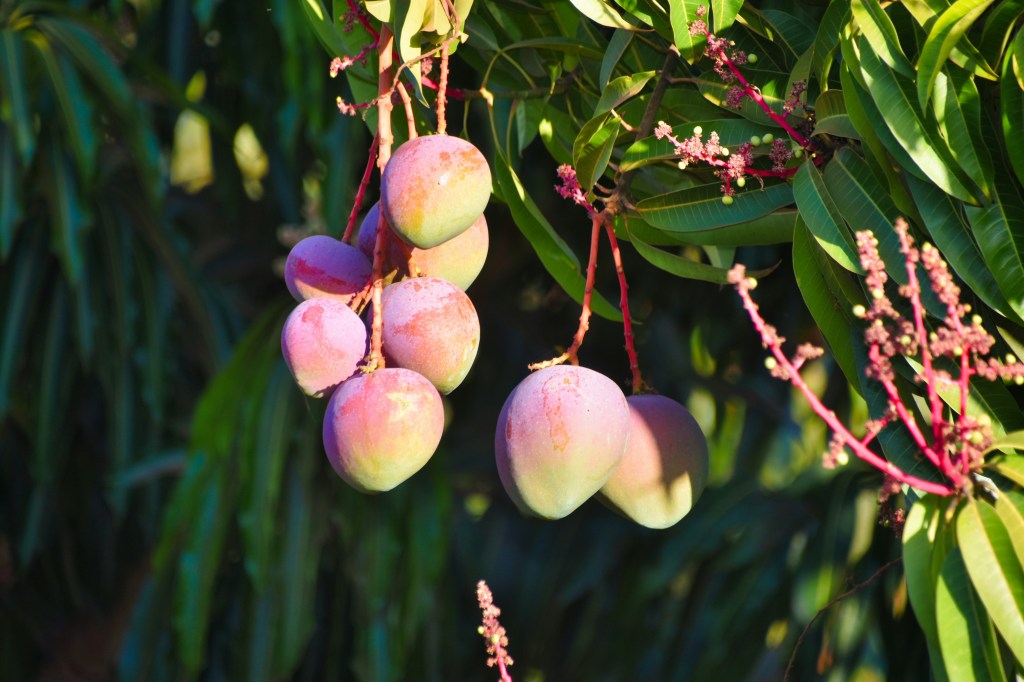
Imagine the situation. You are home, in the land where you are meant to be. It is a land of God’s presence and blessing, a land of fruitfulness, flowing with goodness. And so, you plant a tree. A fruit tree. You look forward to its crop, feeding your family in the summer months.
Of course, you know, as a good gardener, that you must wait for some good fruit. You don’t want the first small, pathetic looking crop. (Though secretly you are still thrilled that it is there. You have succeeded at producing something!) But now it’s year 2. Of course, the crop won’t be like it will be in latter days, but nonetheless there might be a handful to be picked and enjoyed. You go out one day, and you see a few pieces. They look small, but ripe, and ready for a little snack. You reach out your hand, ready to bring them back inside and boast to your wife that you can actually grow something! And then you remember, “This fruit is forbidden”. (Indeed, the Hebrew reads, “uncircumcised”. It is not ready to be used as a symbol of God’s faithful covenant yet.)
Year 3 comes, and you somewhat sullenly, impatiently, watch on as yet more fruit bursts in colour between the leaves, as the soil of the fertile land feeds life into your prized possession. Yet still you cannot touch it. The thought comes to mind, “Maybe just one wouldn’t matter. Maybe I could just reach out and have one, just to check, of course. I want to make sure I’m growing them right…”
You again reach out your hand, and the words come burning in your heart, “You shall be holy, for I, the LORD your God, am holy.” You remember your calling. You may not earn your living from the tabernacle, but you are called to be a priest in every area of life. Suddenly, your mind is cast back to the stories of old. You recall how Adam and Eve, the first couple, were given a garden to tend to. They were acting like priests in the tabernacle. But out of haste, and a longing for what was not to be theirs at that time, they reached out and took of the fruit.
“I am the LORD your God”.
Maybe his way is better. You withdraw your hand.
The next year, you watch, as without your intervention, the tree bears a large crop. Yet this time, you are not tempted to eat it. You understand the peace that arises from living out the calling to be a priest. To tend to things, and allow God to do his work, in his time. The deep sense of pleasure that arise from merely being one to do what your Lord commands, and to harvest things according to his own schedule. The satisfaction that comes from not taking things before their time, but receiving them in His good time. You harvest the crop, and without pinching even one succulent piece, you devote every last one to God.
In the 5th year you stand and watch, looking at two trees beside each other. One just 2 years planted. One now in its 5th year. “What a difference!”, you think, “I am glad that I did not take of that forbidden fruit. What I have now is worth a whole lot more to me.” Not just in the size of the crop, but also in what it has done to your heart as a priest who sets the Lord apart as holy in his heart.
Was a passage like this in Paul’s mind when he wrote in 1 Corinthians 3:
“What then is Apollos? What is Paul? Servants through whom you believed, as the Lord assigned to each. I planted, Apollos watered, but God gave the growth. So neither he who plants nor he who waters is anything, but only God who gives the growth.
He who plants and he who waters are one, and each will receive his wages according to his labor. For we are God’s fellow workers. You are God’s field, God’s building.”
– 1 Corinthians 3:5-9
The temptation to make a whole lot about the work themselves was great. That’s what the Corinthians were doing on their behalf. But Paul is having none of it. He sees them as a field, something to be tended to. Then he shifts to describing them as a building, a temple, the holy space that mirrors a garden where the priests are to minister.
It was God’s work. Only God gives growth. And the fruit should be reserved for God’s good time. That is when it shall yield blessing upon blessing.
For those in full-time ministry, the temptation is great still. Rush on with things. Expect to see growth quickly. Relish the thought of what could be next year. And, like the first priests in the garden, we reach out our hand, and we value the shortcut over the fruit that will be seen in time.
Yet it is not just for full-time workers. As a parent the temptation is just as great, and there are less books and podcasts warning me against it than there are with ministry. How do I deal with a difficult child day after day? As an employee, as a business owner, as a spouse, or a friend, we can so easily want quick fixes, to reach out our hands and make things right. We so often lack the self-control needed to say, “I will not touch it, I shall wait to see what God shall do.”
May we all settle in our hearts today, to, as Peter says to people whom he calls a royal priesthood, living and ministering in this world in every sphere of life, just like Leviticus:
“But in your hearts honor Christ the Lord as holy…”
– 1 Peter 3:15
Have him as the holy Lord, ever before us.
Realise that his desire is to bless, and cause fruitfulness.
Wait upon his timing, and do not try to wrestle it from him.
And one day, you will enjoy the fruits of his labours.

 Imitators of Those
Leave a Reply