

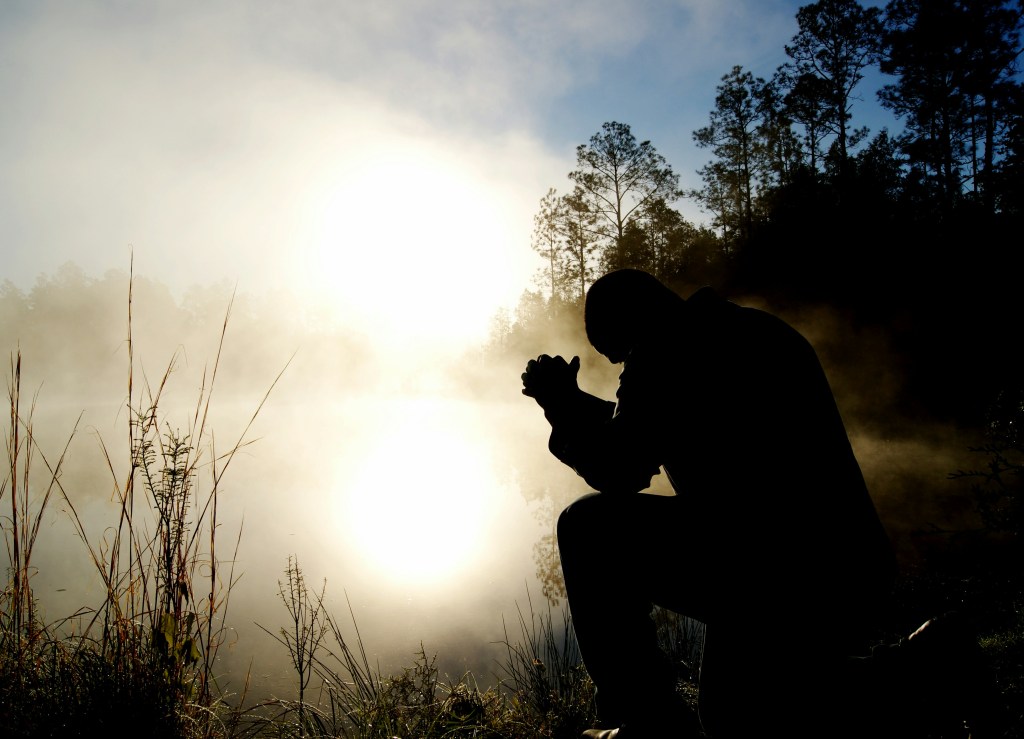
A couple of months ago I stood in a little village in rural Ireland, with my father in the faith, staring out across the rolling drumlins interspersed by the many lakes that fill the gaps in undulating landscape. Lakes like the one in which I and many others have been baptised. A long summer evening meant the sun was still up, but it began to hang a bit lower in the sky, warming the scene somewhat. As we spoke of God’s faithfulness, and our own weakness, this man in his seventies wept. Not tears of sadness, but tears of humility. Water fills the lowest of places.
He spoke of gratitude of how the Lord had done so much. And of how the young men who had come up over the many years were so much better than he. They could understand the Word better, and teach it better. They were better at reaching young people, etc. What did he do to deserve the privilege of witnessing this.
Now, for anyone who knows this man, he is no stranger to investing a life in young people, teaching the Scriptures, and seeing lives changed. But in humility he was bowed down, and happy to take a back seat, as the shoots of harvest rose up from the seeds he had planted over decades of faithful ministry. Out of a grateful heart he could praise what was coming behind him.
It’s unfortunately not always the way. Many times I have seen older men hold the reins too long, only ever despairing at the way that younger people do things differently. I remember once hearing of a man in his 80s who was finally handing over the reins, very grateful to have some “younger men” coming up behind him. The younger men in question were within a decade of retirement themselves! The ministry and leadership of younger people is not always given due value.
On the other side of things, chronological snobbery is alive and well in many younger people. The idea of “considering the outcome” of the faith of those who preceded them, and becoming imitators thereof, the ministry of those of old is often considered outdated and ineffective, not quick enough or relevant enough, and jettisoned for exclusively novel ways of doing things. This in spite of the fact that for all their failings and imperfections, previous generations planted many churches, discipled many people, and set up many organisations that continue to bring God glory to this day.
Why is it so difficult, in youth and in old age, to barely see beyond the length of our own nose? Oh to be thankful for the faithful work of what has preceded us, and to rejoice in what is coming behind. Why do we so often make ourselves the standard upon which history turns?
Is it any wonder that both Jesus and Paul had to warn so much against searching after greatness? One would think that after walking with Jesus for 3 years and observing his manner of life that it would have been engrained in his disciples to humble themselves. But it is deep in human nature to pursue the impressive. And funnily enough, it often exists in the form of ourselves, or the projection we have of ourselves. It is easy to measure up when you base the standard off yourself.
Being back in Ireland has been refreshing. In seeing the ministry of many saints who are hidden from public view, but are seen by heaven. Faithfuly living for Christ.
A church in Scotland had a lady turn 100 years old. They asked her what special thing they could do for her to celebrate. Her answer? Send £500 to Dónal’s family for their missionary work.
A message comes from a lady in Northern Ireland who has prayed for many workers daily, for her whole life. Though now in a later stage of life, she and a group of other women with her, travel to hear missionaries speak, pray for them, encourage them.
Near Dee’s house, in the middle of nowhere, is a small hall, where believers from around the community (most of whom are older), come once a week to pray, often holding us up before the Throne.
Some younger guys spoke at the summer camp that we’ve been involved with since our childhood. Their presentation is clear, they speak with conviction, and with a love for their Saviour and the teens they are ministering to. And then they ask for advice and feedback, when they are streets ahead where some of us were at their age. In their gifting they have humility.
There is a refreshment that comes from knowing our place. Not as adjudicators of the past and future, but as those who occupy a small place in the cosmic plan of God, through millennia, across continents and peoples. We shall not stand great in the kingdom as having “mastered” the Christian walk, as having “arrived” at the best ministry practice that somehow changed everything.
The kingdom belongs to the children, the praying women hidden away, daily praying for people who don’t even know them. It belongs to those who with stuttering tongue pray from the heart, simply out of a heart to praise God. It belongs to those who look at their forefathers and long to be as faithful as them, and to those who say of those behind them, “they are better than I”.
Oh, for eyes to see these hidden ones, the greatest in the kingdom of heaven. Oh for a heart to become like them. Oh to stand in our place, and have eyes full of wonder at the work that God has wrought.
News came this morning of the death of Wendell Berry*, a poet whose work calls us to slow down, quietens the fretful heart, and calls to an abiding place of rest. In honour of him, here is a poem that perhaps fits the moment:
I go by a field where once
I cultivated a few poor crops.
It is now covered with young trees,
for the forest that belongs here
has come back and reclaimed its own.
And I think of all the effort
I have wasted and all the time,
and of how much joy I took
in that failed work and how much
it taught me. For in so failing
I learned something of my place,
something of myself, and now
I welcome back the trees.
*Apart from his poems, I would highly recommend one his novels Jayber Crow.


Leave a Reply