

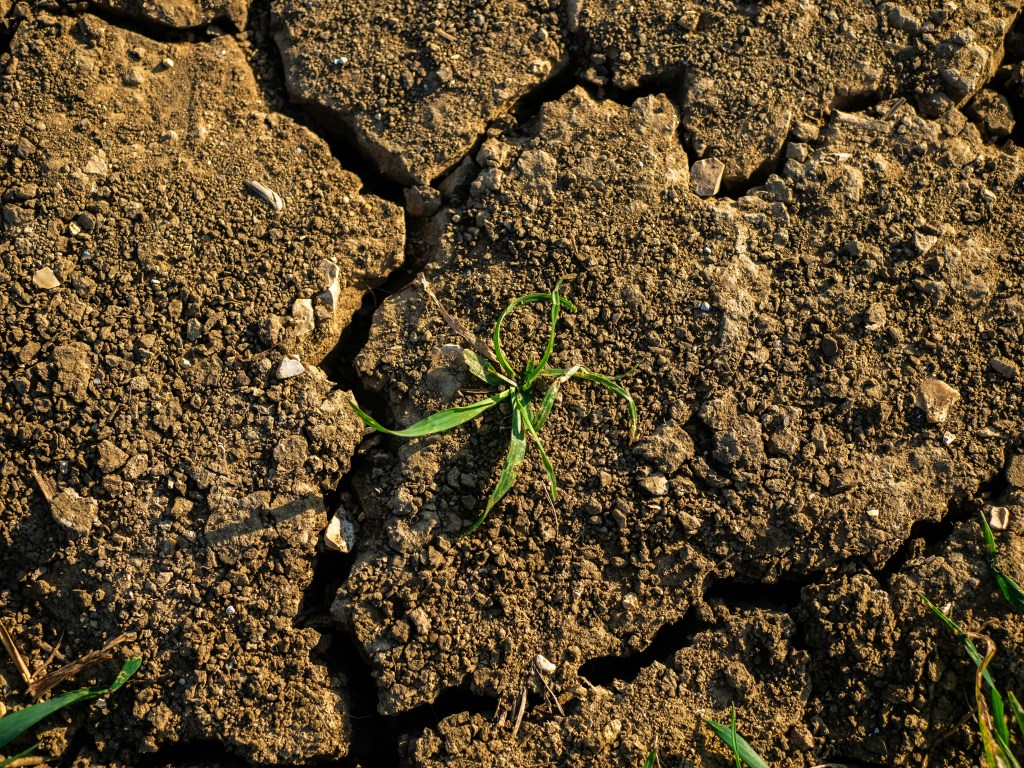
We miss the rain.
Between October and March there is very little rain here in our South Asian nation. Certainly not regularly. It makes up for it in the monsoon time, when the torrents fall; “the rains come down and the floods come up”, as the song goes.
But having been back in Ireland for the birth of our third child during the rainy seasons, we missed the rainy season here. And in Ireland we marvelled at the European heatwave this year, which left us with only one or two days of real Irish rain the entire time we were staying there. On those days we had to explain to our older kids that actually, this is the norm, not the dry, sunny days!
Now we have returned to South Asia, and have seen one shower of rain, and a couple of smatterings, and probably won’t see much more until March time. Our Irish sensibilities are in protest!
But for us Irish, the rain is simply something to enjoy and play in, or be annoyed at and stay inside for a cosy day. Here in South Asia, one must prepare for the rain. And the different means of preparation demonstrate a lot about one’s attitude towards said precipitation.
Short, but powerful pre-monsoon storms blow in around April time. The wind whips up in a fury, the blue sky suddenly darkens to a deep grey, and one must close the balcony door and get the clothes in before the rumbling, crashing thunder begins, and forked lightning pierces the heavens. Then ten minutes later, the downpour is finished.
But around this time, in the city, one may see men making some preparations for the more continuous rains that will soon be arriving. The rickshaw drivers will start fashioning plastic bags into makeshift hats, and making sure they have a plastic sheet on hand for their fares to cover their legs with. (Inevitably riddled with holes, but it’s the thought that counts, right?). Those who cycle around will make sure they have mud-guards in place to stop the water splashing up their back, while those who travel by motorcycle will make sure their chain is freshly oiled. Even walking up steps into shops is a reminder that they were built with flooded streets in mind. Preparation has gone before.
For the city-dwellers, the monsoon rains are an inconvenience that must be mitigated against to the best of their abilities. Avoidance of said inconvenience is the purpose behind their preparations.
Now compare this to those who dwell in the villages, whose livelihood is usually rice farming. They too prepare, but it has very different intentions. After some months of no rain, and thus dry hard ground, the rains come as a blessing. Of course, there may be floods that damage their house. Yes, many of the same inconveniences exist as in the city. But at the end of the day, these farmers prepare by gathering their seed, by preparing to sow their crop. For the same rains that make city-living a bit more difficult, will soften up the ground and make it possible for these village-folk to survive.
The same rain. Both parties prepare. But one is with annoyance at the inconvenience, and one is out of eager expectation of the fruit that will remain at the end.
Recently at a men’s Bible study we were looking at the parable of the four soils. I was noted there that for the second soil – the rocky ground – the external cause of the plant withering is the sun. But is that really the cause? After all, is it not the same sun that causes the healthy plants to grow and bear much fruit? But Jesus tells us that the plant responds to the sun in this way “since they had no root, they withered away”.
Is it tribulations that cause some who receive the Word to later fall away? From one point of view, yes. And yet the real reason lies beneath the surface. The tribulations only serve to highlight that “he has no root in himself”.
So then the question comes; what do we do when we encounter verses like 1 Peter 4:13?
“But rejoice insofar as you share Christ’s sufferings.”
or James 1:2?
“Count it all joy, my brothers, when you meet trials of various kinds.”
When the rains of suffering come, when the sun of tribulation hangs high in the cloudless sky, how have we prepared? Viewing it as an inconvenience, or acknowledging the difficulties, do we nonetheless await with eager expectation that fruit that shall come from it? Those in the former category will look at the quoted portions and baulk at the idea of rejoicing in something that will cause such distress and pain. All suffering, from the most minor problem of the day, to the intense distress of death, appears as an obstacle, a stumbling block, something they would rather avoid at all costs.
Those who live like the village folk of South Asia will keep reading the remainder of the verses.
“But rejoice insofar as you share Christ’s suffering, that you may also rejoice and be glad when his glory is revealed.“
-1 Peter 4:13
“Count it all joy, my brothers, when you meet trials of various kinds, for you know that the testing of your faith produces steadfastness. And let steadfastness have its full effect, that you may be perfect and complete, lacking in nothing.“
– James 1:2-4
Peter, James, (and the many other authors of Scripture who present similar thoughts) were not being optimistically naive, callous or insensitive as they wrote. They themselves were those who were persecuted and yet went on their way rejoicing that they were counted worthy to suffer for Christ. They were persecuted, imprisoned, put to death. And yet they did not prepare to meet these rains of suffering as if they were an inconvenience to be avoided.
Rather, they counted the cost, and saw the fruit that would result from these hardships. And like the Author of their salvation before them, they endured the sufferings of the cross for the joy set before them. They prepared for suffering with eyes on the fruit which would remain. Present fruit in a refined character, and eternal fruit in the eternal glory which awaited them.
Oswald chambers, speaking on 1 Peter 4:13, said:
“It is only when we are related to Jesus Christ that we can understand what God is after in His dealings with us. It is part of Christian culture to know what God’s aim is.
In the history of the Christian church the tendency has been to evade being identified with the sufferings of Jesus Christ; men have sought to procure the carrying out of God’s order by a short cut of their own. God’s way is always the way of suffering, the way of the “long, long trail.””
– Oswald Chambers
As we consider the problems of the day ahead, or contemplate the sufferings that may arise, either on account of entropy, or on account of persecution, how will we respond? How do we prepare for the rains of suffering?
May we all, by God’s grace, be found to have prepared not as those trying to avoid an inconvenience, but as those who acknowledge the hardship, but eagerly await the fruit that shall result, both now and in eternity.
*For transparency, the main concept of different preparation for monsoon time is an elaboration on an illustration given by one of our local pastors, used with his permission.


Leave a Reply